Table of contents
- What is gut health for kids?
- How does your child’s microbiome change as they grow?
- Why does gut health matter beyond digestion?
- How to improve gut health in kids
- What are the best foods for kids’ gut health?
- Doctor’s take: 4 ways to build healthy gut habits early
- Do kids need probiotics for gut health?
- What digestive symptoms should parents watch for?
- When should you take your child to the doctor for gut concerns?
- Help your child build healthy gut habits that last
Stomachaches, constipation, picky eating — kids’ digestive concerns can leave parents wondering what’s normal and whether they should be doing more.
Your child’s gut is developing right alongside them. And the everyday habits they build as they grow can help support not only digestion, but their overall health.
The good news? Supporting gut health for kids doesn’t have to mean complicated diets, expensive supplements, or another family wellness project.
Here’s what parents should know about their child’s developing microbiome, the habits that matter most, and when digestive changes deserve a closer look.

What is gut health for kids?
Gut health refers to how well the digestive system functions, including how it breaks down food, absorbs nutrients, and eliminates waste.
Your child’s digestive tract is also home to a community of microorganisms called the gut microbiome.
These microorganisms participate in digestion and interact with other systems throughout the body, including the immune system.
But the microbiome isn’t something that stays the same throughout life.
In children, it develops and changes as they grow.

How does your child’s microbiome change as they grow?
A child’s gut microbiome develops rapidly during early life, influenced by factors such as feeding, diet, environment, illness, and medications.
Infancy and early childhood
The first years of life are an important period of microbiome development.
Feeding patterns, the introduction of solid foods, and environmental exposures can influence which microorganisms become established in the digestive tract.
There is substantial natural variation, and researchers have not established one perfect microbiome profile for every child.
School-age children
As children grow, their eating habits and routines become more established.
Offering a variety of nutritious foods, encouraging physical activity, and paying attention to digestive patterns can help support overall health.
This is also a useful time to help children become more comfortable recognizing and communicating how their bodies feel.
Adolescence
During adolescence, dietary habits, schedules, stress, and other aspects of health may change.
Teenagers can also experience digestive conditions that require medical evaluation, including inflammatory bowel disease.
Persistent symptoms shouldn’t automatically be dismissed as stress or normal growing pains.

Why does gut health matter beyond digestion?
Your child’s gut is involved in more than processing food.
Digestion and bowel regularity
A healthy digestive system helps the body process nutrients and maintain normal bowel movements.
Constipation is a common concern in children and may be influenced by diet, hydration, routines, medications, or other factors.
Gut health and immune function
The digestive tract and immune system interact closely.
Gut microorganisms participate in immune-system development and regulation, although this doesn’t mean a particular supplement or food will prevent infections.
The gut-brain connection in children
The gut and brain communicate in both directions.
Stress and emotional experiences can influence digestive function, and ongoing stomach discomfort can affect how children feel and function.
If your child frequently complains of stomachaches, it’s important to take their symptoms seriously rather than assuming they’re simply anxious.

How to improve gut health in kids
Parents don’t need to overhaul the entire household’s diet to support healthy digestion.
Start with small, sustainable habits.
1. Offer fiber-rich foods
Fiber supports bowel regularity and provides fuel for certain gut microorganisms.
Age-appropriate sources include fruits, vegetables, whole grains, beans, and lentils.
Increase fiber gradually when appropriate, particularly if your child isn’t used to eating much of it.
2. Focus on food variety
Different foods provide different nutrients and fibers.
Instead of trying to make every meal perfect, focus on offering variety over time.
That might mean introducing a new fruit, adding a vegetable to a familiar meal, or trying a different whole grain.
For selective eaters, repeated low-pressure exposure can be more realistic than expecting immediate acceptance.
3. Keep kids hydrated
Adequate fluids help support normal digestive function.
Encourage regular access to water throughout the day, especially during physical activity or hot weather.
4. Encourage everyday movement
Physical activity supports overall health and can help promote normal bowel function.
Outdoor play, walking, biking, dancing, and other age-appropriate activities all count.
5. Build healthy routines
Consistent eating, sleeping, and bathroom routines can support digestive comfort and help children recognize their body’s signals.
For children experiencing constipation, a pediatric clinician may recommend specific toileting strategies.

What are the best foods for kids’ gut health?
A balanced diet containing different sources of fiber is a practical place to start:
- Fruits: berries, pears, and apples provide fiber and nutrients
- Vegetables: carrots, peas, and broccoli add dietary variety
- Whole grains: oatmeal and whole-grain bread support fiber intake
- Beans and lentils: black beans, chickpeas, and lentils provide fiber and plant nutrients
- Yogurt with live cultures: plain or low-sugar yogurt can be part of a varied diet
Not every child will enjoy every food. The goal is gradual variety, not perfection.

Doctor’s take: 4 ways to build healthy gut habits early
Tips from Dr. Akin Oyalowo
Supporting your child’s gut health starts with everyday habits. According to Dr. Oyalowo, it’s important to help children develop a varied diet and learn to recognize how different foods and routines make them feel.
- Start with variety. Offer different fruits, vegetables, whole grains, and other age-appropriate foods to help children develop a balanced eating pattern.
- Build healthy habits early. Introducing a variety of nutritious foods during childhood can help establish habits that continue as children grow.
- Help kids understand their bodies. Encourage children to communicate when something hurts, feels uncomfortable, or changes from what’s normal for them.
- Don’t ignore ongoing symptoms. Recurring stomachaches, bowel changes, or other persistent digestive concerns deserve a conversation with a pediatric healthcare provider.
The important thing to remember is that everyday choices can make a meaningful difference in supporting a healthy gut as children grow.

Do kids need probiotics for gut health?
Probiotics are live microorganisms that may provide health benefits when used in appropriate amounts.
You may have seen supplements marketed as the best probiotics for kids’ gut health.
But not every child needs a probiotic.
Research on probiotics varies depending on the strain, dose, child’s age, and condition being treated.
Some specific probiotic products have been studied for particular pediatric digestive concerns, but that doesn’t mean any probiotic supplement will improve a child’s overall gut health.
The American Gastroenterological Association recommends a condition-specific approach rather than routine probiotic use for all gastrointestinal concerns.
If you’re considering a probiotic for your child, talk with their healthcare provider about whether one is appropriate and what evidence supports it.

What digestive symptoms should parents watch for?
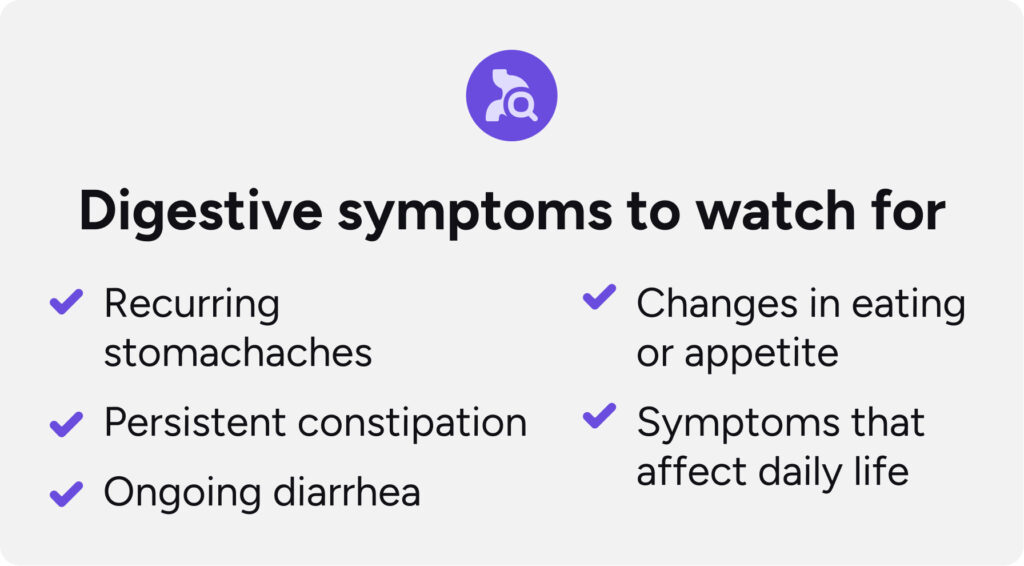
Children occasionally experience stomachaches, constipation, or other digestive symptoms.
What matters is whether those symptoms are persistent, recurring, worsening, or affecting their everyday activities.
Pay attention to changes such as:
- Recurring stomachaches: Abdominal discomfort that keeps coming back, lasts longer than expected, or interferes with everyday activities.
- Persistent constipation: Hard or painful bowel movements, difficulty passing stool, or changes in bathroom habits that don’t improve.
- Ongoing diarrhea: Frequent loose stools that continue, recur, or are accompanied by other symptoms.
- Changes in eating or appetite: Digestive discomfort that makes your child reluctant to eat or is associated with unexpected weight changes.
- Symptoms that affect daily life: Stomach problems that interfere with school, sleep, play, or other activities.
It’s also worth noticing whether symptoms seem connected to certain foods, stressful situations, medications, or changes in routine — or if they are signs of bad gut health.
But remember: A connection doesn’t necessarily mean you’ve found the cause. A healthcare provider can help you understand what may be contributing.

When should you take your child to the doctor for gut concerns?
Not every stomachache requires a doctor’s visit. But you don’t have to wait until your child is seriously uncomfortable to ask for help.
When to schedule a visit
Consider checking in with your child’s healthcare provider if they experience:
- Stomachaches that keep coming back or aren’t improving.
- Constipation or diarrhea that persists or recurs.
- Changes in bowel habits that seem unusual for your child.
- Digestive symptoms that interfere with eating, sleeping, school, or everyday activities.
- Concerns about growth, appetite, or unexplained weight changes.
Your child’s provider can consider their age, medical history, symptoms, and daily habits to determine whether additional evaluation or treatment may be helpful.
When symptoms need more urgent attention
Some symptoms shouldn’t wait for a routine appointment, including:
- Blood in the stool or rectal bleeding
- Significant or worsening abdominal pain
- Persistent vomiting or difficulty keeping fluids down
- Signs of dehydration, such as substantially reduced urination, dry mouth, or unusual lethargy
- Unexplained weight loss or concerns about growth
These symptoms don’t necessarily indicate a serious condition, but prompt evaluation can help identify the cause and appropriate treatment.
Seek emergency care for severe abdominal pain, a rigid or markedly swollen abdomen with significant illness, green vomit, significant bleeding, severe dehydration, or a child who is difficult to wake or unresponsive.
For additional guidance, see the National Institute of Diabetes and Digestive and Kidney Diseases’ resources on constipation in children.

Help your child build healthy gut habits that last
Supporting your child’s gut health doesn’t require a perfect diet or a complicated wellness routine.
Small habits — offering a variety of foods, encouraging movement, supporting healthy routines, and helping your child recognize how their body feels — can provide a foundation for digestive and overall health.
And when something doesn’t seem right, you don’t have to figure it out alone.
Depending on your benefits, Included Health can help you find appropriate care, connect with a provider, and get guidance on the next steps for your child’s health.

Dr. Heather Hockenberry is board certified in family medicine. She earned her doctor of medicine degree at the University of Nevada Reno School of Medicine where she also completed her internship and residency in family medicine, serving as chief resident during her time there. As an urgent care physician for a decade prior to coming to Included Health, she treated acute illnesses and injuries of a diverse nature in a clinic setting. She came to Included Health in 2015 as a staff physician, and currently serves as an associate medical director supporting our clients from a clinical perspective.

Dana Duran is a copywriter with over 15 years of experience writing and editing content for start-ups, wellness brands, and non-profits, including 10 years of writing, editing, and producing in the museum and cultural space. She currently lives and works in San Diego, CA.