
Table of contents
- What does poor gut health actually mean?
- 7 signs of bad gut health
- What might be causing your gut symptoms?
- Doctor’s take: Pay attention to this when your gut feels off
- How do you know when gut symptoms need medical attention?
- What can you do to support better gut health?
- When might another medical opinion help?
- Get support for your digestive health
An occasional stomachache or a little bloating after a meal usually isn’t cause for alarm. But what about digestive symptoms that keep coming back, last longer than expected, or seem different from what’s normal for you?
Your gut can give you useful information about your health. The challenge is knowing which changes may respond to everyday habits and which deserve a closer look.
Here’s what to know about common signs of bad gut health, what might be contributing, and when it’s time to seek care.

What does poor gut health actually mean?
“Poor gut health” is a broad term, not a specific medical diagnosis.
It may refer to digestive symptoms, problems with gastrointestinal function, or concerns about the gut microbiome — the community of microorganisms living in your digestive tract.
But having bloating, constipation, or another digestive symptom doesn’t automatically mean you have an unhealthy microbiome.
Digestive symptoms can have many causes, including diet, medications, food intolerances, stress, infections, and medical conditions.
The most useful starting point is understanding what you’re experiencing and whether it represents a change from your normal.

7 signs of bad gut health
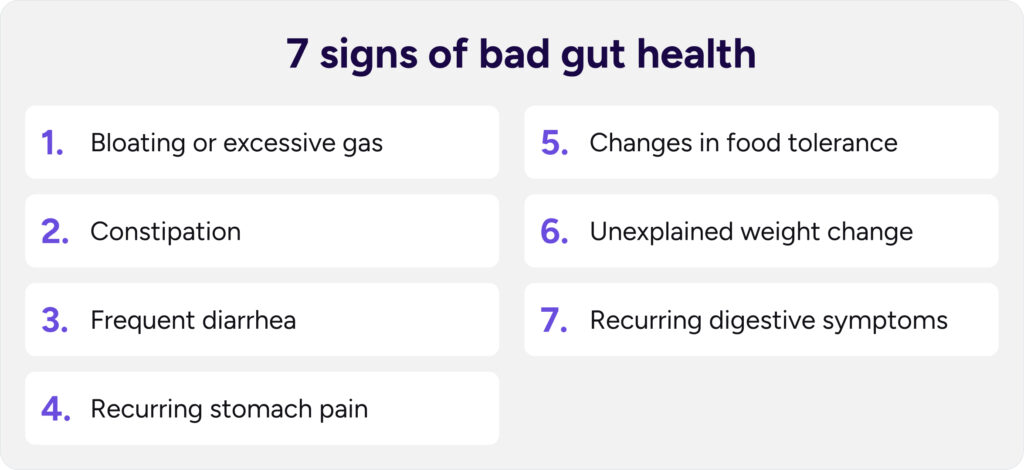
It can be hard to know what qualifies as bad gut health or just an occasional upset. Here’s what to look out for:
1. Frequent bloating or excessive gas
Gas and bloating are common, particularly after certain meals.
But bloating that becomes persistent, painful, or increasingly disruptive may deserve evaluation.
2. Constipation or changes in bowel movements
Everyone’s bowel habits are different.
What matters is whether you’re experiencing a meaningful change, such as stools becoming consistently harder, less frequent, or difficult to pass.
3. Frequent diarrhea or loose stools
Temporary diarrhea can happen with infections or dietary changes.
Recurring or persistent diarrhea, especially when accompanied by other symptoms, may indicate a problem worth discussing with a clinician.
4. Recurring stomach pain or discomfort
Occasional abdominal discomfort can have many explanations.
Pain that keeps returning, worsens, or interferes with everyday activities deserves closer attention.
5. Changes in how you tolerate certain foods
Foods you’ve eaten comfortably for years may sometimes begin causing digestive discomfort.
For example, lactose intolerance can develop over time.
Rather than eliminating large food groups on your own, consider discussing recurring symptoms with a clinician who can help identify possible causes.
6. Unexplained changes in weight or appetite
Unexpected weight loss or persistent appetite changes can occur for many reasons.
They aren’t specific signs of poor gut bacteria, but they can be important clues that deserve medical evaluation.
7. Digestive symptoms that keep coming back
Sometimes the most meaningful sign isn’t one particular symptom — it’s the pattern.
If you’re repeatedly dealing with bloating, constipation, diarrhea, or abdominal discomfort, it’s worth paying attention to how often symptoms occur, how long they last, and whether they’re affecting your daily life.
You don’t need to wait until digestive symptoms become severe to ask a healthcare provider about them.

What might be causing your gut symptoms?
Digestive symptoms can have many explanations. Understanding possible contributing factors can help you and your provider determine what deserves attention.
Diet and food intolerances
Certain foods can trigger digestive symptoms, particularly if you have difficulty digesting specific ingredients.
Lactose intolerance, for example, can cause bloating, gas, and diarrhea after consuming dairy products.
Keeping a simple food and symptom diary may help identify patterns.
Stress, sleep, and the gut-brain connection
Your gut and brain communicate in both directions.
Stress can influence bowel movements and digestive sensitivity, while ongoing digestive discomfort can affect sleep and emotional well-being.
That doesn’t mean digestive symptoms are necessarily caused by stress. It’s one possible factor among many.
Medications and antibiotics
Certain medications can affect digestive function.
Antibiotics, for example, can cause diarrhea and alter gut microbial communities. Other medications may contribute to constipation, nausea, or stomach discomfort.
If symptoms develop after starting a medication, discuss them with your provider or pharmacist rather than stopping treatment on your own.
Underlying digestive conditions
Persistent digestive symptoms may sometimes be associated with conditions such as irritable bowel syndrome (IBS), celiac disease, inflammatory bowel disease, or other gastrointestinal disorders.
A clinician can review your symptoms, medical history, and risk factors to determine whether testing or additional evaluation is appropriate.

Doctor’s take: Pay attention to this when your gut feels off
Tips from Dr. Akin Oyalowo
When digestive symptoms don’t feel normal for you, knowing what to pay attention to can help you have a more productive conversation with your healthcare provider.
- Know what’s normal for you. Pay attention to your usual bowel habits, food tolerance, and digestive comfort. A meaningful change from your normal pattern can be worth discussing.
- Look for patterns, not just individual symptoms. Notice when symptoms appear, how long they last, and whether they seem related to foods, medications, stress, or changes in your routine. A food and symptom diary can help.
- Don’t ignore persistent changes. If symptoms continue longer than expected, don’t seem connected to an obvious trigger, or keep returning, talk with a healthcare provider about whether further evaluation is needed.

How do you know when gut symptoms need medical attention?
Not every digestive symptom requires an appointment. But knowing what to monitor and when to seek care can help you make a more informed decision.
Symptoms you may be able to monitor at home
Occasional mild bloating, gas, or digestive discomfort may resolve without medical treatment.
If symptoms are mild, short-lived, and not accompanied by concerning changes, you may be able to monitor them while paying attention to potential triggers.
When to schedule a medical evaluation
Consider talking with a provider if you experience:
- Recurring or persistent abdominal discomfort
- Constipation or diarrhea that isn’t improving
- Unexplained changes in bowel habits
- Symptoms that interfere with eating, sleeping, or daily activities
- Digestive changes that don’t have an obvious explanation
Your provider may recommend dietary changes, testing, treatment, or additional evaluation depending on your symptoms.
Warning signs that shouldn’t be ignored
Some digestive symptoms deserve prompt medical attention, including:
- Blood in your stool or rectal bleeding
- Unexplained weight loss
- Persistent vomiting
- Significant or worsening abdominal pain
- Symptoms suggesting anemia, such as unusual fatigue, particularly when accompanied by digestive changes
Severe abdominal pain, significant gastrointestinal bleeding, fainting, or signs of severe dehydration may require emergency care.
Importantly, these symptoms don’t necessarily mean you have a serious disease, but they shouldn’t be dismissed.
The National Cancer Institute has highlighted the importance of evaluating digestive symptoms, including in younger adults, as colorectal cancer rates among younger people have increased.

What can you do to support better gut health?
Everyday habits can help support digestive health, particularly when symptoms are mild and don’t suggest an underlying medical condition.
Some practical steps for how to improve gut health include eating a variety of fiber-rich foods, drinking adequate fluids, staying active, getting sufficient sleep, and finding manageable ways to address stress.
But lifestyle changes aren’t a substitute for medical evaluation when symptoms persist or worsen.

When might another medical opinion help?
Sometimes digestive symptoms continue even after you’ve sought care.
If you’ve received a diagnosis or treatment plan but still have unanswered questions, another medical perspective may help you better understand your options.
An expert second opinion can be particularly valuable when you’re navigating a complex diagnosis or significant treatment decision.
It isn’t necessary for every routine digestive concern, but it may provide additional clarity when important questions remain.

Get support for your digestive health
When something about your digestion doesn’t feel right, you don’t have to figure out the next step alone.
Depending on your available benefits, Included Health can help you understand your care options, find an appropriate provider, connect with virtual care, get a second opinion, or access expert guidance for more complex health decisions.
Whether you’re dealing with persistent symptoms or simply aren’t sure where to start, the right support can help you move forward with greater confidence.

Dr. Heather Hockenberry is board certified in family medicine. She earned her doctor of medicine degree at the University of Nevada Reno School of Medicine where she also completed her internship and residency in family medicine, serving as chief resident during her time there. As an urgent care physician for a decade prior to coming to Included Health, she treated acute illnesses and injuries of a diverse nature in a clinic setting. She came to Included Health in 2015 as a staff physician, and currently serves as an associate medical director supporting our clients from a clinical perspective.

Dana Duran is a copywriter with over 15 years of experience writing and editing content for start-ups, wellness brands, and non-profits, including 10 years of writing, editing, and producing in the museum and cultural space. She currently lives and works in San Diego, CA.