
Table of contents
When was the last time you took stock of your whole health picture — not just how you’re feeling today, but the things you’ve been meaning to take care of, too?
Maybe it’s a screening you haven’t scheduled, a symptom you’ve learned to live with, or a follow-up that never made it onto your calendar. When life gets busy and nothing feels urgent, it’s easy for these things to fall through the cracks.
But those overlooked needs can create gaps in care that are worth another look. The good news? You don’t have to tackle everything at once. Discover what may have fallen through the cracks, what deserves attention now versus later, and how Included Health can help you find the right care and take your next step.

What are gaps in care?
A gap in care happens when recommended healthcare is missed, delayed, or left incomplete. This might mean a preventive screening you haven’t scheduled, a lab test you never completed, or a follow-up appointment that hasn’t happened.
It’s important to note that not every postponed appointment represents a clinical care gap. But when recommended care doesn’t happen, important opportunities to prevent, identify, or manage health concerns may be missed.
Care gaps can affect people of any age, including those who otherwise feel healthy.

What causes gaps in care?
Even when you know your health matters, following through isn’t always simple. Some common reasons care gaps happen include:
- Nothing feels urgent. When you’re feeling well, preventive screenings, vaccinations, and routine check-ins may not seem like priorities.
- Getting care feels complicated. Finding the right provider who understands your needs and experiences, scheduling and navigating appointments, or coordinating care can be challenging — and those barriers can make it harder to get the care you need.
- You’re unsure what’s covered. Questions about benefits, in-network providers, and potential healthcare costs can make it harder to take the next step.
- Life gets in the way. Between work, family responsibilities, and everything else you’re managing, healthcare tasks can slip through the cracks.
- You’ve gotten used to a concern. Sometimes symptoms develop gradually or become so familiar that you stop thinking of them as something worth discussing.
Understanding the most common health needs that get overlooked can help you identify potential gaps in your care.

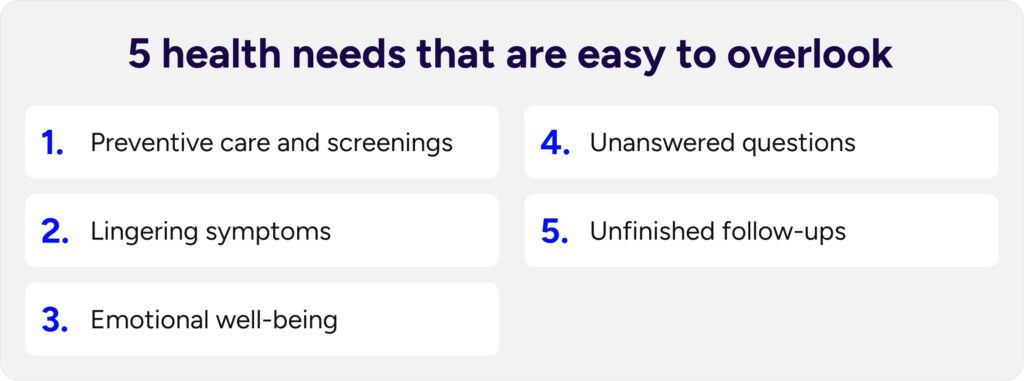
5 health needs that are easy to overlook
Some care gaps are obvious, like an overdue appointment, while others are less apparent. Here are five areas worth considering.
1. Preventive care and screenings
Feeling healthy doesn’t necessarily mean there’s nothing to check on. Recommended preventive care can help identify potential health concerns before symptoms develop.
Consider whether you’re up to date on:
- Age- and risk-appropriate screenings, such as those for certain cancers
- Recommended vaccinations
- Routine wellness visits
- Lab tests or monitoring recommended by your provider
One particularly easy-to-miss example? Lab work that was ordered but never completed.
Maybe your doctor recommended blood tests during your last appointment, but you never found time to visit the lab. Following through can help your provider assess your health or monitor an existing condition. For families, this is also an opportunity to review children’s preventive visits, recommended vaccinations, and developmental check-ins.
Keep in mind that the right preventive care depends on your age, medical history, and individual risk factors. If you’re not sure where to start, check out our article on preventive care by age. Additionally, your healthcare provider can help you understand what’s recommended for you.
2. Lingering symptoms and everyday health concerns
Not every health concern arrives suddenly. Sometimes it’s the cough that hasn’t completely gone away, the fatigue you’ve learned to work around, or the sleep problems you’ve started accepting as normal.
Other examples include:
- Recurring headaches or discomfort
- Persistent allergy symptoms
- Changes in sleep quality
- Unexplained changes in weight or appetite
- Symptoms that may be related to medications
For example, certain blood-pressure medications can cause a persistent dry cough. Other medications may affect your sleep or contribute to digestive symptoms or signs of bad gut health.
If you’ve noticed a change since starting a medication, discuss it with your healthcare provider rather than stopping treatment on your own.
Just because you’ve gotten used to a symptom doesn’t mean it’s something you have to keep living with. Speaking with a provider can help determine whether further evaluation or a change in your care plan may be appropriate.
3. Mental health and emotional well-being
It’s easy to recognize when you’re physically sick, but emotional health concerns can be harder to identify, especially when they develop gradually.
Feeling more stressed or anxious, having trouble sleeping, feeling persistently overwhelmed, or finding less enjoyment in things you usually like are all signs to watch for. When those experiences become part of your routine, you may stop recognizing them as concerns worth discussing. But mental health deserves attention just like physical health.
For parents, it’s also worth checking in on how your children are doing emotionally and getting guidance on how to deal with school anxiety. School-related stress, changes in sleep, and challenges adjusting to routines can continue well beyond the start of the school year.
Remember that you don’t need to wait for emotional distress to become overwhelming before seeking support.
4. Unanswered questions about a diagnosis or treatment plan
Sometimes the gap isn’t an appointment you’ve missed — it’s an important question that remains unresolved.
Maybe you’ve received a diagnosis but don’t fully understand what it means. Perhaps you’re managing an ongoing condition and wondering whether your current treatment is still appropriate. Or you may be experiencing side effects that you’ve accepted as an unavoidable part of treatment.
Questions worth revisiting can include:
- Do I understand my diagnosis and treatment options?
- Are my medications working as expected?
- Could a new symptom be related to my treatment?
- Would another specialist’s perspective help me make an important decision?
Not every unanswered question requires a second opinion. But for complex diagnoses or significant treatment decisions, an expert review may provide valuable additional perspective.
5. Unfinished follow-ups and overlooked benefits
Healthcare doesn’t always end when an appointment does. Sometimes there’s a referral to schedule, a test to complete, or a follow-up conversation that never happens. And beyond clinical care, there may be available benefits or resources you haven’t fully explored.
Consider whether you have:
- Outstanding referrals, lab work, or follow-up appointments
- Questions about which providers are in-network
- Uncertainty about what care may cost
- Eligible healthcare benefits or reimbursement opportunities you haven’t reviewed
Understanding your coverage and available support can make it easier to plan your next step.
Because benefits and plan-year rules vary, check your specific coverage before assuming a service is covered or that unused funds expire.

Which health needs deserve attention now?
Recognizing a potential care gap is important. But not everything requires the same level of urgency.
The next step is understanding what you can make a plan for and what shouldn’t wait.
Health needs you can make a plan for
Some healthcare needs may not require an immediate appointment, but they still deserve a place on your calendar.
These may include:
- Routine preventive screenings
- Annual wellness visits
- Establishing care with a primary care provider
- Recommended vaccinations
- Nonurgent follow-ups or monitoring
If you’ve postponed one of these, consider taking a step toward scheduling it or discussing the appropriate timing with your provider.
Care that can be planned for shouldn’t become care that’s postponed indefinitely.
Health concerns that shouldn’t wait
Other concerns deserve timely medical attention, particularly when symptoms are new, changing, worsening, or interfering with daily life.
Examples include:
- A persistent cough or respiratory symptoms that aren’t improving
- New wheezing or breathing changes
- Concerning dizziness
- Unexplained weight loss
- Blood in the stool
- A chronic condition, such as diabetes, that isn’t adequately controlled
- New or worsening medication side effects
- Mental health symptoms that are becoming difficult to manage
The appropriate timing and setting for care depend on your symptoms and medical history.
Some warning signs require emergency care. Severe difficulty breathing, chest pain or pressure that may indicate an emergency, fainting, vomiting blood, significant bleeding, or other severe symptoms require urgent in-person care.
If you’re unsure whether a nonemergency concern deserves attention, a healthcare provider can help you determine the next step.
Doctor’s take: How to identify gaps in care
Tips from Dr. Heather Hockenberry
Not sure where to start? You don’t need to create an extensive healthcare checklist to make progress. Start by asking yourself a few practical questions:
1. What recommended care haven’t I completed?
Think about screenings, vaccinations, lab tests, follow-ups, or check-ins that may still be outstanding.
2. Have I gotten used to something that deserves attention?
Consider symptoms you’ve normalized, changes in your health, medication concerns, or emotional health needs you’ve been putting off.
3. What care and benefits are available to me?
Review your coverage, available care options, and any financial or navigation support that may help you access appropriate care.
4. What needs attention now, and what can I plan for?
New, worsening, or concerning symptoms may require timely evaluation. Routine preventive needs can often be planned for an appropriate future appointment.
5. What’s one useful step I can take?
That might mean scheduling a check-in, completing an outstanding test, finding a provider, or getting another perspective on a treatment decision.
And getting started doesn’t always require an in-person doctor’s appointment.
Depending on your concern, a virtual provider may be able to evaluate symptoms, discuss treatment options, order appropriate testing, or help determine whether in-person care is necessary.
For example, certain urinary symptoms or skin concerns may be appropriate for an initial virtual evaluation. Some situations still require laboratory testing or an in-person examination.
The important thing is finding the right starting point for your needs.

Get help closing gaps in your care
You don’t have to address every health need at once — or figure out every next step on your own.
Whether you’re ready to discuss a lingering symptom, find an appropriate provider, get mental health support, understand your benefits, or seek another perspective on a complex diagnosis, Included Health can help you navigate your options.
Depending on your available benefits, you may be able to connect with virtual care, get help finding a provider, access mental health support, or request an expert second opinion.
Closing a care gap starts with recognizing what matters and taking one useful step. Start today, so you can have more healthy days ahead.

Dana Duran is a copywriter with over 15 years of experience writing and editing content for start-ups, wellness brands, and non-profits, including 10 years of writing, editing, and producing in the museum and cultural space. She currently lives and works in San Diego, CA.

Dr. Heather Hockenberry is board certified in family medicine. She earned her doctor of medicine degree at the University of Nevada Reno School of Medicine where she also completed her internship and residency in family medicine, serving as chief resident during her time there. As an urgent care physician for a decade prior to coming to Included Health, she treated acute illnesses and injuries of a diverse nature in a clinic setting. She came to Included Health in 2015 as a staff physician, and currently serves as an associate medical director supporting our clients from a clinical perspective.