
We help make preventive care easy.
Table of contents
- What preventive care actually means
- Why preventive care changes with age
- In your 20s and 30s: Build your baseline
- In your 40s and 50s: Pay attention to trends, not just symptoms
- In your 60s and beyond: Stay proactive and keep care connected
- Preventive care at every age: Don’t skip the basics
- Men’s mental health matters too
- Spotlight: What would a doctor do?
- How to make your next preventive visit more useful
- Take the next step
Preventive care isn’t about waiting until something feels wrong. It’s about staying ahead of potential health issues, understanding what matters for your age right now, and having someone in your corner who knows your health story. The truth is, what you should check changes as you move through different life stages, as family history becomes relevant, and as your mental and physical needs evolve.
Think of routine care as your health maintenance plan. You wouldn’t skip oil changes just because your car seems fine, right? The same logic applies to your body. Regular check-ins help you catch small concerns before they become big problems and give you a clear picture of what’s worth paying attention to now.
This article will help you understand common age-based check-ins and make it easier to know when to book a visit with your provider. You don’t need to memorize every recommendation. You just need to know what’s worth discussing at your next appointment.

What preventive care actually means
What is preventive care? It’s the care you get when you’re feeling mostly fine but want to stay that way. It includes routine visits, health screenings, vaccines, and conversations about potential risks before symptoms show up. Unlike reactive care, where you’re addressing something that’s already causing problems, prevention focuses on keeping you healthy and catching concerns early.
Put a different way, a sick visit addresses symptoms you’re already experiencing. A wellness visit looks at patterns, trends, and risks that might not feel urgent yet but deserve attention. And here’s something often overlooked: routine care includes emotional well-being too, not just physical tests. How to stay healthy isn’t just about numbers on a chart. It’s about sleep, stress, mood, and daily habits.

Why preventive care changes with age
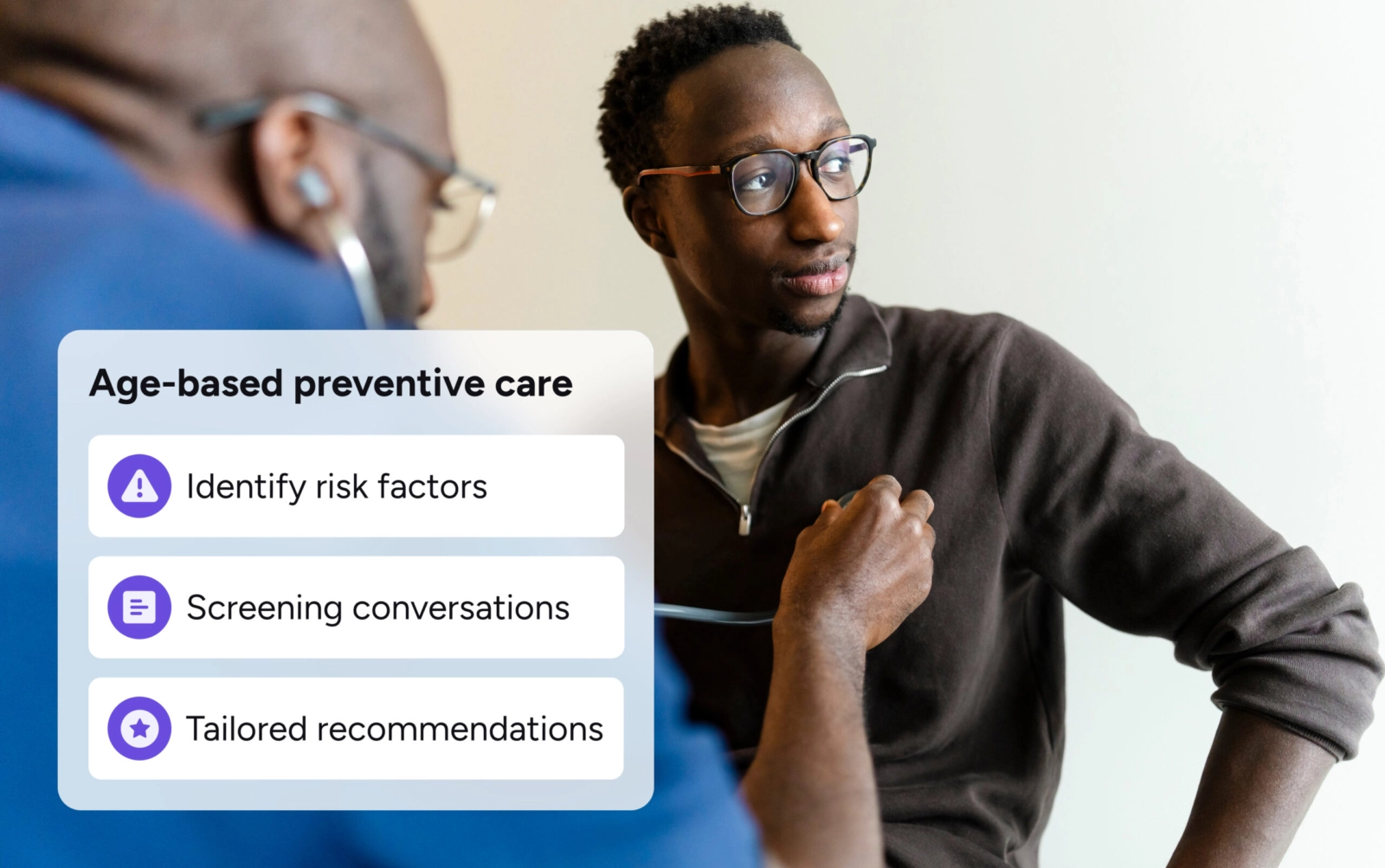
The purpose of age-based care isn’t to create pressure or hand you a rigid checklist. It’s designed to help catch concerns early and support your long-term health in ways that make sense for where you are right now. What you need at 25 is different from what you need at 55 or 75, and care should change accordingly.
Risk factors, screening conversations, and priorities often shift as you age. Your provider might start asking different questions, suggesting new tests, or updating your plan based on changes in your family history or lifestyle. That’s not because something is wrong. It’s because personalized care evolves with you, and the most helpful next step is often a regular checkup with a provider who can tailor recommendations to your specific situation.

In your 20s and 30s: Build your baseline
These decades are often about establishing habits early, before life gets busier or symptoms appear. Many people in their 20s and 30s feel healthy and assume they don’t need a checkup, but this is often the ideal time to create a baseline and spot patterns that matter later.

What to check in on now
During your 20s and 30s, common check-ins include:
- Blood pressure: High blood pressure often has no symptoms, so checking it regularly helps catch concerns before they escalate.
- Vaccines: Make sure you’re up to date on routine vaccines and boosters.
- Sexual health conversations: Discuss what screenings or steps make sense based on your health history.
- Sleep, stress, mood, and energy: These aren’t just quality-of-life issues. They affect your physical health too, and bringing them up during a physical checkup can open important conversations.
- Family history: Share any changes in your family’s health history. Knowing what runs in your family helps your provider personalize care.
Why it matters
The habits you build now, the relationships you form with your Care Team, and the conversations you start set the foundation for the years ahead.
What to ask at your visit
- What screenings make sense for me right now?
- What changes in my family history should I mention?
- Are stress or sleep issues worth bringing up even if they seem manageable?

In your 40s and 50s: Pay attention to trends, not just symptoms
Your 40s and 50s are often when more formal screening conversations become relevant. This doesn’t mean something is wrong. It means certain health shifts become more visible during these years, even when you feel mostly fine. This is the time to pay attention to trends between visits, not just wait for symptoms that feel urgent.

What to check in on now
Common check-ins during your 40s and 50s include:
- Blood pressure, cholesterol, and blood sugar: These numbers help assess your cardiovascular health and diabetes risk.
- Cancer screening discussions: Based on your age and risk factors, your provider might discuss health screenings for breast, cervical, colon, or prostate cancer.
- Weight, sleep, energy, and hormone-related changes: Changes in metabolism, sleep patterns, or energy levels are common during these decades and worth discussing.
- Stress and burnout patterns: Chronic stress takes a physical toll. Bringing it up during a wellness visit is essential.
Why it matters
Many health shifts become more visible during these years, even when you feel mostly fine. The difference between a manageable concern and a more complex issue often comes down to timing.
What to ask at your visit
- Which health screenings should I be checking in on now?
- What trends should I watch between visits?
- Which of my current symptoms could progress to something more?

In your 60s and beyond: Stay proactive and keep care connected
Care at this stage is often about protecting independence and quality of life. Consistency matters, coordination between providers matters, and staying ahead of small changes before they affect day-to-day life matters.

What to check in on now
Common check-ins during your 60s and beyond include:
- Mobility and fall risk: Simple balance exercises and home safety adjustments can prevent serious injuries.
- Bone health: Bone density screenings help assess osteoporosis risk.
- Hearing or vision changes: These changes are common but shouldn’t be ignored. Addressing them early helps maintain independence.
- Medication review: As prescriptions accumulate, a regular review ensures they’re still necessary and there are no interactions.
- Ongoing screenings as appropriate: Your provider will help you understand which tests still matter for you.
- Mental health and isolation: Social connection and emotional well-being are critical. Feeling isolated or consistently low deserves attention.
Why it matters
Care at this stage is often about protecting independence and quality of life. Small adjustments now can prevent bigger challenges later.
What to ask at your visit
- Which screenings still matter for me now?
- Are any medications affecting my energy, balance, or mood?
- What changes should I be monitoring more closely?

Preventive care at every age: Don’t skip the basics
Some care staples apply at every stage of life. These are the foundations that support long-term health:
- Blood pressure: Check it regularly. High blood pressure often has no symptoms but can lead to serious complications.
- Vaccines: Stay up to date on routine vaccines and boosters.
- Sleep: Quality sleep affects everything from your immune system to your mental health. If sleep is consistently poor, bring it up.
- Nutrition and movement: You don’t need a perfect diet or intense workouts. Consistent, sustainable habits matter more than perfection.
- Family history updates: As new diagnoses happen in your family, share them with your provider.
- Cancer screening conversations as appropriate: Your provider will help you understand which tests make sense based on your age and risk factors.
- Mental health screening: Mood changes, anxiety, or persistent stress are part of routine care.


Men’s mental health matters too
Men often delay talking about stress, mood changes, anxiety, irritability, sleep issues, or loss of interest in hobbies or work. There’s a persistent myth that mental health concerns need to be “serious enough” before they’re worth mentioning. That’s not true. Mental and emotional well-being are part of routine care, not a sign that something has gotten out of control.
If you’re noticing stress that won’t let up, mood changes that feel harder to shake, sleep disruption, or changes in how you’re coping, those are all valid reasons to bring it up during a wellness visit. This applies even if physical symptoms are brought to your attention first. Your provider is there to help you address both.

Spotlight: What would a
doctor do?
Tips from Dr. Heather Hockenberry
When it’s time for my own wellness check, I like to come prepared. Before I meet with a doctor, I think about the following so I can answer questions easily:
- When was my last routine visit? If it’s been more than a year, it’s time to schedule one.
- Have my energy, sleep, mood, or stress levels changed? Even subtle shifts are worth mentioning.
- Have I updated my provider on family history or life changes? New diagnoses in your family or major life transitions can affect your health.
- Have I been putting off any checkups because I feel “basically fine”? Feeling mostly fine is exactly when routine care matters most.
- Is there anything I’ve normalized that deserves a conversation? Chronic fatigue, ongoing stress, persistent aches, or mood changes you’ve learned to live with might be more addressable than you think.
What I’d do next:
Book a visit, bring a short list of questions, and treat preventive care as an ongoing reset point rather than a one-time task. You don’t need to have all the answers before you walk in.


How to make your next preventive visit more useful
A little preparation goes a long way in making your wellness visit more productive. You don’t need extensive notes. Just bring what you can, and your provider will help fill in the gaps. Here’s what to consider:
- Write down recent health changes: Have you noticed shifts in your energy, sleep patterns, mood, weight, or physical symptoms? Jot them down.
- List medications and supplements: Include everything you’re taking, even over-the-counter medications or vitamins.
- Note family history updates: Has anyone in your immediate family been diagnosed with a new condition recently? Share that information.
- Mention stress, sleep, and mood: These aren’t secondary concerns. They’re central to your overall health.
- Bring questions about age-based screenings: If you’re not sure what you need or when, ask.
This preparation turns a routine visit into clearer, more personalized care. You’ll leave with a better understanding of what matters now, what can wait, and what steps make sense for you.

Take the next step
Staying healthy is about knowing what to check in on now, understanding what matters for your age, and having a provider who knows your story. You don’t need to figure out every next step alone. That’s what Included Health Primary Care is here for.
Whether you’re just starting to think about routine care or you’re ready to reconnect with a provider you trust, the most important step is the one you take today. Book a visit and start the conversation or activate your account to get started.
Ready to take the next step? Learn more about what Included Health offers and how we can support your health journey. When stress and feeling run down become signs to check in, we’re here to help.
Your health is worth the time. Let’s make it easier together.

Dana Duran is a copywriter with over 15 years of experience writing and editing content for start-ups, wellness brands, and non-profits, including 10 years of writing, editing, and producing in the museum and cultural space. She currently lives and works in San Diego, CA.

Dr. Heather Hockenberry is board certified in family medicine. She earned her doctor of medicine degree at the University of Nevada Reno School of Medicine where she also completed her internship and residency in family medicine, serving as chief resident during her time there. As an urgent care physician for a decade prior to coming to Included Health, she treated acute illnesses and injuries of a diverse nature in a clinic setting. She came to Included Health in 2015 as a staff physician, and currently serves as an associate medical director supporting our clients from a clinical perspective.