
Schedule your preventive visits today
Table of contents
Back-to-routine season has a way of bringing everything back at once. Earlier mornings. Fuller calendars. Less flexibility. And all the health tasks that were easy to push off during summer suddenly start feeling more urgent.
That’s what makes this time of year tricky. The goal isn’t to overhaul your whole life before fall gets busy. It’s to reset the routines that matter most, schedule the care that’s easier to handle now than later, and know where to start if something already feels off.
This health guide is designed to help you do exactly that. With guidance from Dr. Brian Knox, Included Health’s Clinical Affairs Medical Director, we’ll walk through what’s worth resetting now, what care is smart to schedule before life gets busier, and how to think through your next step if you’re dealing with a symptom, a stressor, or a question you’ve been putting off.

What to reset before life gets busy
When routine comes back, the first things that start to feel off usually aren’t major health issues. They’re the basic patterns that quietly drift over summer and suddenly matter a lot more once the pace picks up.
That’s why a back-to-routine reset doesn’t need to start with tackling everything at once. It should start with the few routines that help you feel steadier, more functional, and less reactive once your schedule gets tighter.
Reset your sleep schedule first
If one routine tends to drift the fastest over summer, it’s sleep. Bedtimes get later. Wake times get looser. And then the return to work, school, and packed mornings hit all at once.
“You can’t just restore a sleep cycle that matches your school or work routine immediately. Your body just won’t do it,” shares Dr. Knox.
That’s why sleep is usually the smartest place to start. When your sleep schedule is off, everything else tends to feel harder too — mood, focus, patience, energy, and stress tolerance.
A few practical ways to reset it:
- Start adjusting your sleep and wake time gradually instead of trying to flip it overnight.
- If mornings are the bigger issue, anchor your wake time first.
- Give yourself at least a couple of weeks if you can, especially if your summer schedule drifted a lot.
- Build a simple wind-down routine that helps signal bedtime, even if it’s just turning off screens earlier or keeping the same bedtime pattern most nights.
This doesn’t have to be perfect to help. The goal is just to make your routine more predictable before life gets less flexible.
Reset meal timing, not just what’s on your plate
Another thing that tends to slide over summer is when you eat. Breakfast gets later. Lunch gets skipped. Snacks happen whenever. That may not feel like a big deal when your days are looser, but once routine tightens up, irregular meal timing can make busy days feel even harder.
Dr. Knox specifically calls out meal timing as something worth resetting early. “Adjusting your breakfast, lunch, dinner schedule or when you have your snacks makes a lot of sense,” he said.
That matters because when your body isn’t used to your school- or work-year rhythm yet, your mornings can feel harder, your energy can dip earlier, and it becomes easier to miss meals or rely on whatever’s fastest.
A few ways to make this easier:
- Start shifting meals earlier before your busiest week begins.
- Think about timing, not just meal quality.
- Build one or two simple default meals for mornings or packed days.
- Don’t wait until your first rushed week to realize your body’s off schedule.
A steadier eating routine won’t solve everything, but it can take some avoidable friction out of busy days.
Reset your movement plan around real life
Exercise is one of the first things people tell themselves they’ll “figure out later.” Then later turns into a packed week, and the routine disappears altogether.
“Exercise is important for health, but it’s also one of the easiest things to push aside if you don’t build it into your routine intentionally,” shares Dr. Knox.
The key here isn’t building the ideal workout schedule. It’s building one that actually fits your life.
That might mean:
- Deciding ahead of time when movement realistically fits your day
- Being honest about whether you’re more likely to follow through in the morning or later
- Planning something sustainable instead of ambitious
- Accepting that short, consistent activity often works better than an all-or-nothing plan
One of the most useful parts of a healthy routine is that it works with your life, not against it.
Reset your margin, not just your schedule
Back-to-routine health isn’t only about sleep, food, and exercise. It’s also about what disappears when life gets busy: downtime, social connection, recovery, and breathing room.
For adults without kids at home, Dr. Knox points out that work-life balance can slip fast once routine returns. Without being intentional, it’s easy to become the person who works more, connects less, and slowly wears yourself down.
For families, the challenge looks a little different. Parents may be juggling school logistics, work demands, activities, and household rhythms all at once. In that version of busy, perfection isn’t realistic.
So part of a back-to-routine reset is asking:
- What helps me recover when life gets full?
- What tends to disappear first when I’m stressed?
- What do I need to protect so life doesn’t become all work, all logistics, or all reaction?
That kind of margin is part of your health, too.

What to schedule now
Some of the most important health tasks are also the easiest to delay — especially when you don’t have symptoms yet.
That’s what makes this time of year such a good window to get ahead. Scheduling the right care now can save time, stress, and bigger disruptions later.
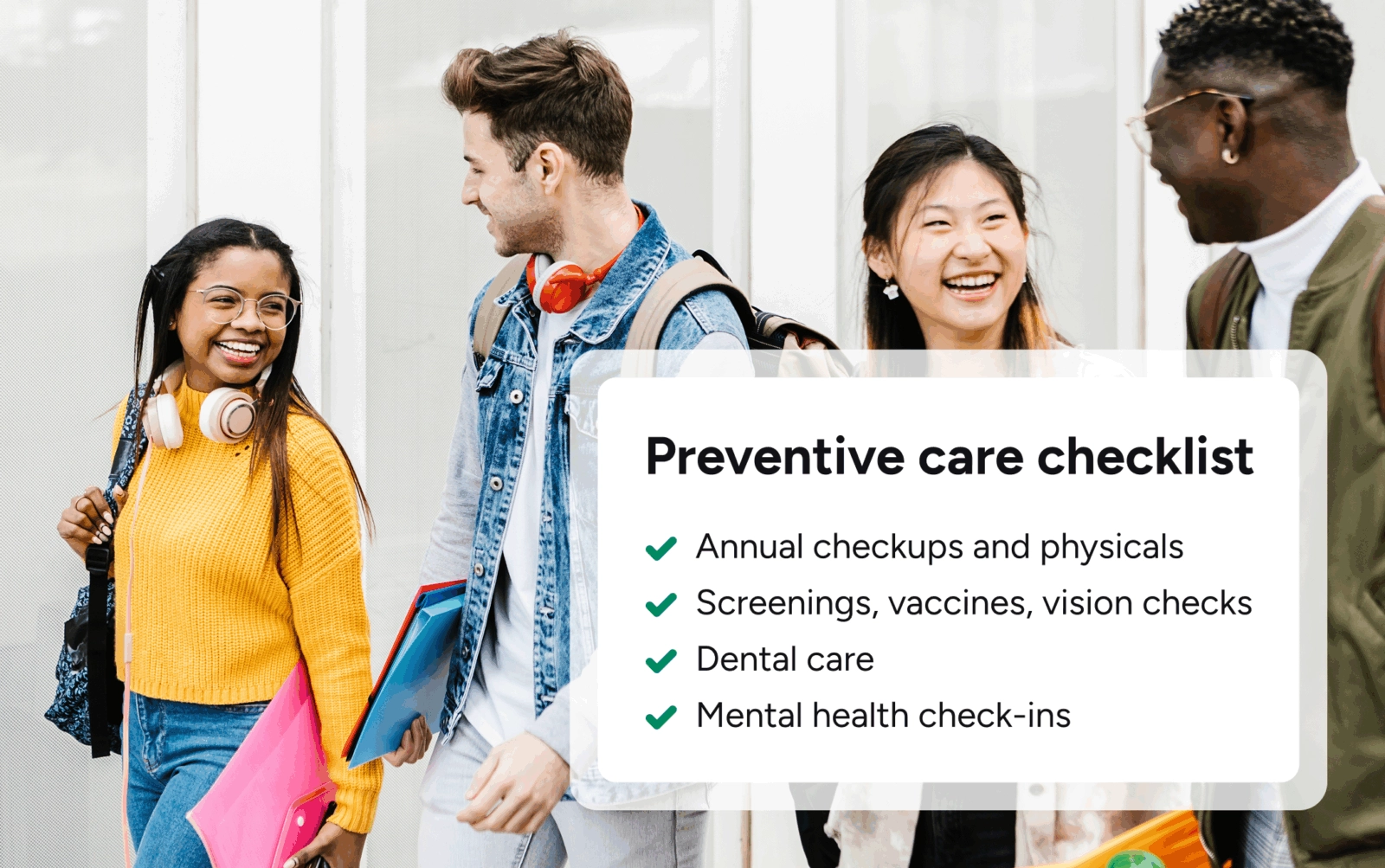
Book preventive care before your calendar fills up
Preventive care is easy to push aside because it rarely feels urgent in the moment. “Because you don’t have symptoms, it’s really easy to brush that aside when your schedule gets busy,” Dr. Knox says.
That includes things like:
- Annual physicals
- Screenings
- Vaccines
- Medication check-ins
- Preventive questions you’ve been meaning to ask
The challenge is that preventive care matters precisely because it helps catch or manage things before they turn into bigger issues. The longer you wait, the more likely it is that something simple becomes harder to deal with.
If you’ve been meaning to book a check-in, this is a smart time to do it.
Handle routine care while you still have more flexibility
Even if you don’t have kids at home, that doesn’t mean you don’t have health needs to plan for. Dr. Knox advises, “Back-to-routine season often gets busy for everyone, and adults still need to think ahead about their own care.”
This could include:
- Follow-up appointments
- Medication needs
- Recurring questions
- Chronic condition check-ins
- Care you know will get harder to schedule later
The earlier you handle these, the less likely they are to turn into one more stressful thing on an already crowded week.
Think ahead about mental health check-ins too
This is one of the most overlooked parts of back-to-routine planning.
Mental health support doesn’t have to start during a crisis. In fact, Dr. Knox offers a much more useful frame: mental health should be core to the way you think about your health, and it’s okay to have a low bar for checking in.
That might mean:
- Reaching out because stress is already building
- Talking to someone because your sleep is off and your patience is shorter
- Checking in because something just feels “off”
- Seeking support because the idea has already crossed your mind more than once
As Dr. Knox puts it, “If you are thinking about it, you probably should just do it.”
That’s a strong reminder that support doesn’t have to wait until things feel severe.

Where to start if something already feels off
This is the question people often get stuck on. Something doesn’t feel quite right, but it’s not always obvious what to do next.
Should you wait it out? Bring it up at your next routine visit? Talk to a provider now? Consider mental health support? Start somewhere else?
You don’t always need a perfect answer right away. But there are a few questions that can help you figure out your next step more clearly.
Start with a quick self-assessment
Dr. Knox’s guidance here is especially useful: new symptoms deserve more attention than familiar ones.
A mild symptom that’s brand new may deserve more attention than something you’ve had before and know how to handle. Severity matters, too. So does whether something is affecting your day-to-day functioning.
A helpful self-check:
- Is this new for me?
- Is it more severe than usual?
- Is it affecting my sleep, work, school, mood, appetite, focus, or ability to function?
If the answer to any of those is yes, it may be worth acting sooner rather than later.
When it makes sense to start with primary care
Primary care can be a good place to start when you’re dealing with:
- Routine concerns
- Recurring symptoms
- Preventive questions
- Mild mood changes
- Medication questions
- Something that doesn’t feel urgent, but also doesn’t feel right to ignore
According to Dr. Knox, primary care is often a strong starting point for common mental health concerns like mild anxiety or mild depression. A primary care provider can help assess what’s going on, talk through options, and guide you on whether more specialized support would help.
If you’re not dealing with something that feels acute or fast-changing, this can be a practical place to begin.
When it makes sense to seek mental health support
Sometimes what feels “off” doesn’t show up as a clear mental health label. It shows up as irritability, exhaustion, headaches, stomach issues, trouble sleeping, lack of motivation, or just not feeling like yourself.
Dr. Knox notes that both adults and kids can show signs of stress or anxiety through physical symptoms, sleep disruption, and changes in behavior or functioning.
It may make sense to seek mental health support when:
- Stress or anxiety is starting to affect daily life.
- Sleep changes are becoming a pattern.
- Mood shifts are sticking around.
- You’re withdrawing from people or activities.
- Things feel harder to manage than usual.
- You’re already thinking about whether you should talk to someone.
You don’t have to wait for a breaking point to take that seriously.
When urgent care may make more sense
There are also times when something needs attention sooner than a routine appointment can provide.
That might be because:
- Symptoms are more acute.
- Something’s changing quickly.
- You can’t reasonably wait days for an answer.
- Your routine makes standard office hours hard to work around.
Dr. Knox shares, “After-hours and virtual options can be especially useful when busy schedules make traditional care harder to access.”
If something can’t wait for routine care, but you’re not dealing with a true emergency, urgent or after-hours support may make more sense.
If you’re not sure, start with guidance
Sometimes the biggest barrier isn’t care itself — it’s uncertainty.
You might not be sure:
- What kind of support fits the situation
- What’s available to you
- Whether you should act now or later
- What your best next step actually is
That’s a real part of healthcare, and it’s one reason guidance matters. If you’re not sure how to find the right provider or where to start, Included Health can help you narrow your options and find care that fits your needs.

What a doctor would do:
Tips from Dr. Knox
If you want guidance on what matters most, Dr. Knox points to a few practical priorities.
If your summer routine drifted:
- Reset your sleep gradually instead of all at once.
- Adjust meal timing before your busiest week starts.
- Make a realistic plan for exercise before life gets packed.
If you know life gets busy fast:
- Take care of preventive care now.
- Handle refills, routine questions, and check-ins earlier.
- Don’t wait until your calendar is already packed.
If stress is already showing up:
- Look at patterns, not just dramatic symptoms.
- Pay attention to whether it’s affecting daily life.
- Keep a low threshold for asking for help.

A simpler way to think about your next step
This week, start with one thing to reset. Then schedule one area of care you’ve been putting off. And if something already feels off, don’t figure it out alone. Here’s an easy way to think about it:
- What to do first? Reset your sleep, meal timing, movement, and the routines that help you feel steadier.
- Need routine care or a health check-in? Schedule a virtual primary care visit.
- Need support for stress, anxiety, or feeling off? Consider booking virtual mental health support.
- Need help finding the right provider? Find the right provider for your situation.
- Need more confidence in a diagnosis or treatment plan? Get a second opinion.
A back-to-routine reset doesn’t have to be dramatic to help. In fact, it usually works better when it isn’t.
Remember, getting ahead doesn’t mean doing everything now. It just means taking the next right step before life gets even busier.

Quan Lam is a copywriter with over 15 years of experience writing and editing content for both start-ups and legacy brands, as well as 2 years of writing experience exclusively within the healthcare space. She currently lives and works in New York City.

Dr. Brian Knox is board-certified in Internal Medicine and Pediatrics, and has been overseeing clinical services at Included Health for the past 3 years. Prior to joining IH 6 years ago, Dr. Knox spent 9+ years providing primary care to adults and children.