What's an alternative health plan?

Due to rising healthcare costs, nearly one-third of large employers already offer an alternative health plan or will in 2027, and another 38% are considering one, according to Mercer.
But what exactly is an alternative health plan, and what makes it different from traditional health insurance?
Traditional models provide access and pay claims, but they do little to shape care decisions or downstream spend.
They've also created affordability problems for members and employers, not to mention a lackluster member experience.
Alternative health plans emerged in response. Many use financial incentives, like variable copays, to steer members to high-quality, cost-effective care.
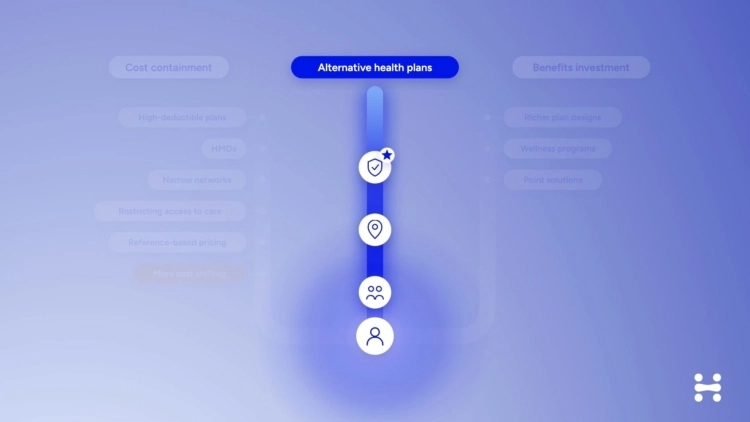
But alternative health plans are a broad category, not a single product, and they aren't all created equal. The category includes a range of models and plan designs, from copay-only plans to high-performance networks and quality overlays.
Some first-wave models add a "shopping" layer on top of a large network so members can compare cost. These models can shift some care decisions, but many amount to a shiny new wrapper around the status quo.
Clinically integrated models — the second wave of alternative plans — connect primary care, navigation, network optimization, and member incentives. This creates the clinical touch points and guidance that help members make smart choices and lower downstream costs.
Plan design, care delivery, and proactive guidance, plus accountability for the total cost of care: That's what makes a plan a true alternative.