
Stress wearing you down?
In this article
- What’s really happening when stress spirals
- 4 early stress effects you might overlook
- How to know when stress is a problem
- What would a doctor do?
- 5 small habits to support stress and health
- Take the next step toward stress management
- You don’t have to stress about stress, and you don’t have to manage it alone.
We often think of stress as just a feeling — a frantic mindset or an overloaded schedule. But stress and health are deeply interconnected, woven together in ways that go far beyond your to-do list. When you feel run down, it is rarely just in your head. That fatigue, brain fog, or sudden change in sleep is often a physiological signal that your body’s stress response system is working overtime.
Rather than dismissing these signs as just part of modern life, understanding how stress and physical health are related is the first step toward breaking the cycle.

What’s really happening when stress spirals
To understand the link between stress and health, look to the body’s control center: the nervous system. When you face a challenge, your body activates the fight-or-flight response, flooding your system with hormones such as adrenaline and cortisol. While this reaction is fine in short bursts, chronic stress keeps these hormone levels high, altering your body’s natural rhythms.
Here’s how that sustained pressure impacts your well-being:
- High cortisol changes physical function:
Chronic stress doesn’t just cause anxiety; it disrupts several critical systems throughout your body, including your circadian rhythm (sleep-wake cycle), immune response, and digestion.
- Mental stress manifests physically:
When your body goes through these physiological changes, mental strain often comes with physical issues like headaches, fatigue, or an upset stomach.
- The connection is a two-way street:
Just as mental stress causes physical symptoms, physical issues like poor sleep or gut imbalances can lower your resilience, making it essential to address the root cause, not just the symptoms.

4 early stress effects you might overlook
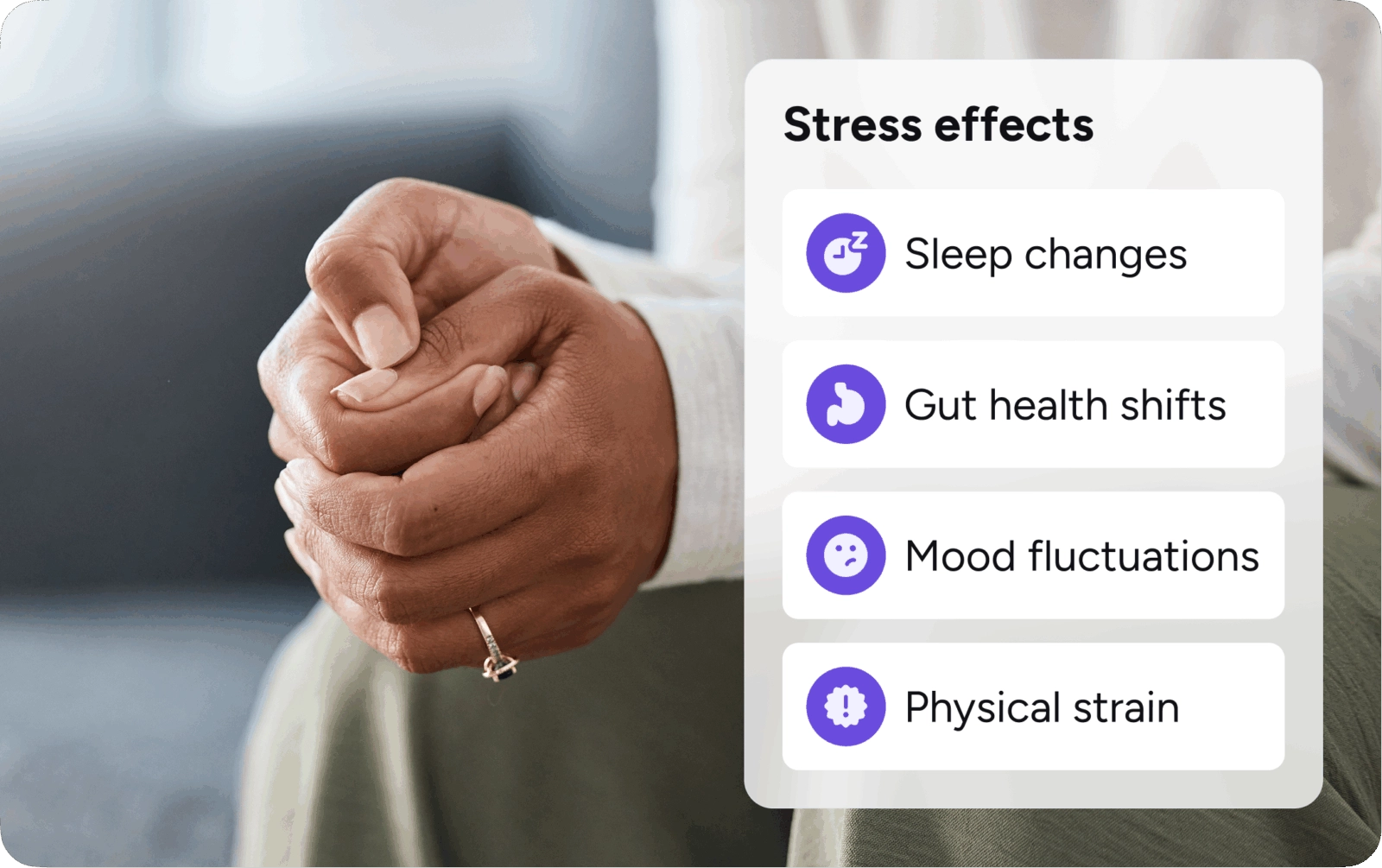
We often wait for a major health event or a mental breakdown before acknowledging that stress is taking a toll. However, the body usually gives us subtle warning signs long before that happens. Recognizing these early whispers can prevent them from becoming shouts. Here are four common areas where stress and health collide:
1. Stress and sleep changes
What it looks like:
- Trouble falling asleep despite feeling exhausted
- Waking up abruptly with a racing mind
- Experiencing light, restless sleep where you never feel recharged
Why it matters:
Sleep is the foundation of stress management and allows your body to regulate mood, balance hormones, and repair tissues. Studies have found that stress and sleep quality are significant predictors of overall health.
When cortisol levels remain high in the evening due to chronic stress, it prevents the natural drop in body temperature and heart rate needed for deep sleep. This creates a vicious cycle: Poor sleep amplifies your body’s stress response the next day, making you more exhausted and less resilient. This, in turn, affects your stress and health in measurable ways.
2. Stress and gut health shifts
What it looks like:
- Persistent bloating or discomfort after meals
- Irregular digestion (swinging between constipation and looseness)
- Sudden nausea or significant changes in appetite (either loss of hunger or intense cravings)
Why it matters:
There is a strong connection between stress and gut health, and this is due to the fact that your brain and your gut are in constant communication with each other via the gut-brain axis — a direct communication line between your gut and your brain.
Whenever you feel stressed, your brain sends signals to your gut to change how your digestive system works. As a result, stress can alter the composition of your gut microbiome and weaken intestinal health. This is why stress issues can often manifest in the stomach first.
3. Stress and mood fluctuations
What it looks like:
- Increased irritability or snapping at loved ones
- Low motivation to do things you usually enjoy
- Emotional reactivity (crying or getting angry more easily than usual)
- Feeling overwhelmed by small, routine tasks
Why it matters:
Stress and mental health are closely linked. When you are stressed for a long time, it lowers the levels of happy chemicals in your brain, such as serotonin and dopamine. Recognizing common mental health symptoms for stress and anxiety early on can help you reach out for support before you burn out.
4. Stress and physical strain
What it looks like:
- Frequent tension headaches or migraines
- Muscle tension, particularly in the neck and shoulders
- Jaw clenching or teeth grinding, often during sleep
- Feeling “tired but wired” (you’re exhausted but unable to relax)
Why it matters:
Stress affects your entire body, and there’s a particularly strong connection between stress and heart health. Long-term stress can raise your blood pressure and change your heart rate. Your muscles also stay tense when you are stressed, which is your body’s way of protecting itself from danger. Over time, staying on high alert wears your body down, showing just how closely stress and your physical health are connected.

How to know when stress is a problem
In a fast-paced world, being busy is often worn as a badge of honor. But there is a distinct difference between a full schedule and a nervous system in distress. How do you know when stress and health have reached a tipping point? It’s usually when the recovery period disappears.
If a weekend of rest doesn’t restore your energy, or if you wake up tired every day, your body is telling you that it’s running on empty.
What is the No. 1 symptom of stress? While it’s different for every person, the feeling of being constantly overwhelmed or unable to handle daily tasks is the most universal sign.


What would a doctor do?
Tips from Dr. Hockenberry
If I were feeling run down, I would pause to ask myself a few grounding questions to assess my stress and health:
- Has my sleep quality or duration changed significantly in the past month?
- Do I feel rested when I wake up, or am I hitting snooze repeatedly?
- Have I been more reactive, impatient, or irritable than usual with my family or colleagues?
- Am I still interested in my favorite activities and feel like spending time with friends?
- Are my stress levels sustained (chronic) or situational (acute)?
- Have I ruled out medical contributors like thyroid issues or other hormonal imbalances, undiagnosed sleep apnea, or other medical issues?
What I’d do next:
First, I would track my sleep patterns for up to one month to get a better understanding of my sleep quality. I would also practice sleep hygiene habits, like cutting caffeine intake late in the day, and avoiding screen time before bed to determine if these improve my sleep. If these patterns persisted, I would schedule a brief mental health check-in. It is important to remember that stress and mental health care is preventive, not just reactive.
Finally, I would consider scheduling a visit with a primary care provider if physical symptoms like headaches or stomach issues continued, to help make sure I’m not missing a physical cause masked by stress.


5 small habits to support stress and health
You don’t need to overhaul your entire life to see improvements. Small, consistent changes can signal safety to your nervous system and help reduce the negative link between stress and health. Here are five actionable steps to help you learn how to relieve stress effectively:

- Prioritize a consistent sleep schedule
Going to bed and waking up at the same time every day regulates your circadian rhythm, which directly influences cortisol production. This consistency helps repair the stress and health connection by allowing your body to predict when it can rest and recover. Aim for a dark, cool room and a wind-down routine that starts 30 minutes before sleep.
- Reduce late-night screen time
The blue light emitted by phones and laptops suppresses melatonin, the hormone that signals sleep. When you are already dealing with stress and health issues, doom-scrolling the news or checking work emails late at night keeps your brain in a state of high alert. Try to disconnect from screens at least an hour before bed to lower mental stimulation.
- Incorporate regular exercise
To help manage stress and support your overall health, try to engage in moderate cardiovascular exercise, such as brisk walking, for 150 minutes each week. This can be broken up into 30-minute workouts over a period of five days. Combine this with gentle strength training workouts, like practicing yoga or Pilates, at least two to three times a week for maximum benefits. These activities help your body burn off stress chemicals without adding more, meaning they’re great if you’re looking to lower your stress levels and searching for ideas on how to improve heart health.
- Schedule structured decompression time
We often wait for free time to appear, but in a busy life, it rarely does. Schedule 15 minutes of “worry-free” time where you do something purely for enjoyment or relaxation. This could be reading, gardening, or deep breathing. This structured pause interrupts the chronic stress cycle and reminds your body that it is safe to relax.
- Eat foods that support stress management
Nutrition plays a massive role in stress management. What foods help relieve stress? Focus on anything anti-inflammatory like complex carbohydrates (oatmeal or whole grains), which can boost serotonin levels. Foods rich in omega-3 fatty acids (like salmon or walnuts) and magnesium (like spinach and pumpkin seeds) also support brain health and regulate cortisol. Avoiding excessive sugar and caffeine prevents the energy crashes that mimic anxiety.

Take the next step toward stress management
Understanding stress and how it affects your health is the first step toward feeling better. It is easy to ignore the signs, but they are your body’s way of asking for help. Stress and health are not separate entities, they are a unified system. When one is out of balance, the other inevitably follows.
Feeling run down is a signal, not a weakness. It can mean that your current load is exceeding your current resources. The good news is that you do not have to navigate this alone. Whether it is stress and mental health support, guidance on stress and gut health, or a checkup for stress and heart health, Included Health is here to help you connect the dots.

You don’t have to stress about stress, and you don’t have to manage it alone.
Book a visit with a primary care or mental health provider today.
Get care and explore your benefits to support your total health journey.

Dana Duran is a copywriter with over 15 years of experience writing and editing content for start-ups, wellness brands, and non-profits, including 10 years of writing, editing, and producing in the museum and cultural space. She currently lives and works in San Diego, CA.

Dr. Heather Hockenberry is board certified in family medicine. She earned her doctor of medicine degree at the University of Nevada Reno School of Medicine where she also completed her internship and residency in family medicine, serving as chief resident during her time there. As an urgent care physician for a decade prior to coming to Included Health, she treated acute illnesses and injuries of a diverse nature in a clinic setting. She came to Included Health in 2015 as a staff physician, and currently serves as an associate medical director supporting our clients from a clinical perspective.