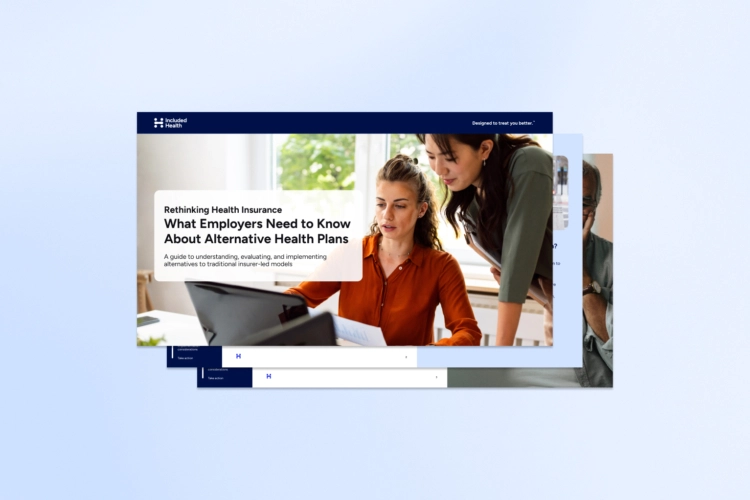
Is your 'alternative' health plan really an alternative?

More than two-thirds of employers now offer an alternative plan or are considering adding one. But look closely and most of these plans change how members shop, not how the plan works. Benefits design (such as variable copays) steers people toward high-value providers, while the underlying networks, infrastructure, and incentives stay largely the same.
Benefits design is an important lever, but it isn't enough on its own to deliver the outcomes and sustainable savings employers and members need. That requires three key domains to work in concert:
- Benefits design that goes beyond cost-sharing to include networks, plan infrastructure, and payment integrity
- Care delivery that is comprehensive and integrated, not limited by static, siloed networks
- Navigation that helps people understand their options, coordinate their care, and manage financial and administrative details
As I wrote in a recent article for Second Opinion:
A true alternative health plan does three things under one roof: it designs the plan, delivers the care, and guides members through it — with incentives tied to healthier members, better care, and lower total cost. If a plan can't do all three, or answers to an insurer's legacy business, it isn't an alternative. It's the status quo with a better app.
Employers shouldn't just ask whether an alternative plan has a compelling feature. They should ask whether it is structurally different: How many of the three domains does it actually operate, who owns each one, and are the incentives aligned around healthier members, better care, and lower total cost?

Owen Tripp is the CEO and cofounder of Included Health, a new kind of healthcare company delivering personalized all-in-one healthcare to millions of people nationwide.