Supporting Black wellness every day

Culturally competent care
for your whole health

Everyone deserves healthcare that truly understands and supports their unique needs and recognizes the profound impact of culturally competent care.

Take a moment to reflect on your health journey with our interactive quiz — a quick, judgment-free assessment designed to help you explore different aspects of your well-being and identify areas where you might benefit from additional support.
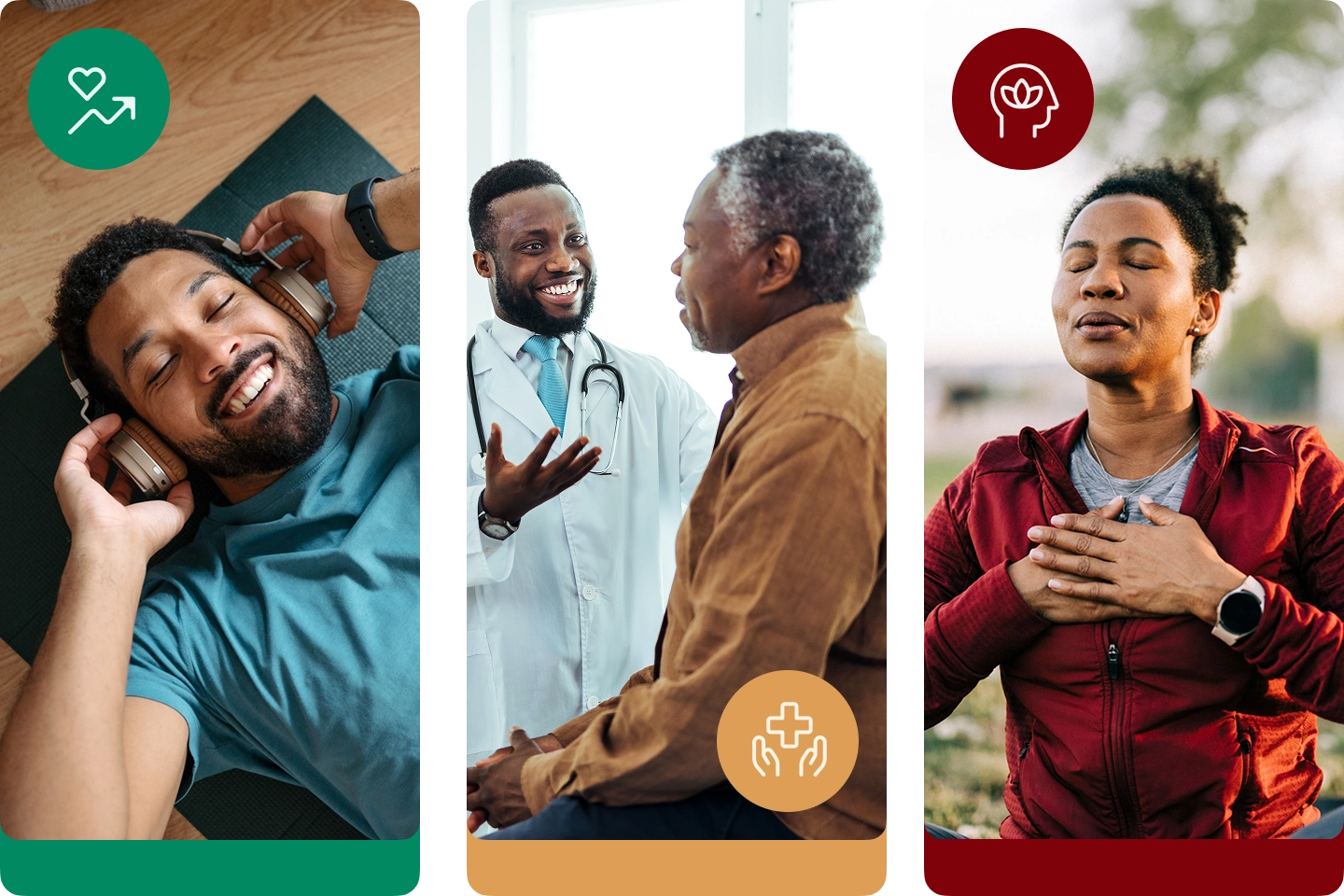
Included Health African American members focusing on their health
Speech bubble symbol icon

Discover your health insights

1. 
How often do you feel overwhelmed by daily stressors or life challenges?

 A. Rarely, I manage stress effectively.

B. Sometimes, I feel a bit stretched.

C. Often, it impacts my daily life.

D. Almost constantly, it's hard to cope.

2. 
When you experience feelings of sadness, anxiety, or emotional distress, how do you typically cope?

A. I have healthy coping mechanisms and a strong support system.

B. I try to manage it on my own, sometimes successfully.

C. I often struggle to cope and it affects my well-being.

D. I tend to keep it to myself and rarely seek help.

3. 
How regularly do you engage in physical activity that raises your heart rate?

A. Most days of the week

B. A few times a week

C. Rarely, it's hard to find the time or motivation

D. Almost never

4. 
When was your last routine health screening (e.g., blood pressure, cholesterol, diabetes check)?

A. Within the last year

B. 1–2 years ago

C. More than 2 years ago

D. I can't remember, or I haven't had one in a very long time

5. 
Almost 60% of African American adults have high blood pressure, and 1 in 3 African Americans with diabetes also have heart disease. How familiar are you with your own family's history of these conditions?

A. Very familiar, I know my risks

B. Somewhat familiar, I know a little

C. Not very familiar, I haven't discussed it much

D. Not at all familiar

6. 
Research shows that 27% of Black adults with high blood pressure lack a personal healthcare provider. How often are you able to discuss heart health or blood pressure with a healthcare professional?

A. Regularly, it's part of my routine checkups

B. Occasionally, if a concern arises

C. Rarely, I don't often bring it up

D. Never, I haven't had a provider I feel comfortable discussing it with

7. 
If you have a new or concerning health symptom, how comfortable are you reaching out to a healthcare provider for guidance?

A. Very comfortable, I know who to contact

B. Somewhat comfortable, but I might hesitate

C. Not very comfortable, I often delay seeking help

D. I usually avoid seeking professional help

8. 
How often do you feel your healthcare provider fully understands your cultural background and its potential impact on your health decisions or experiences?

A. Always, my provider is culturally sensitive

B. Sometimes, but I wish there was more understanding

C. Rarely, I often feel misunderstood

D. Never, I don't feel my cultural background is considered

9. 
What is most important to you when choosing a healthcare provider or health plan?

A. A provider who listens, respects my background, and offers comprehensive care

B. Convenience and ease of access

C. Cost-effectiveness

D. A provider who focuses solely on physical symptoms

10. 
How confident are you that your current healthcare experience addresses your holistic well-being, including your cultural, social, and emotional needs?

A. Very confident, I feel fully supported

B. Moderately confident, there's room for improvement

C. Not very confident, I feel some aspects are overlooked

D. Not confident at all, I feel my needs are not met

Your path to wellness: Where to start
The heart-healthy navigator

Mostly As:

You're actively engaged in your heart health and have a strong foundation for cardiovascular wellness. You know your numbers and understand their importance. Consider connecting with your primary care provider to maintain your proactive approach and ensure all aspects of your heart health continue to be optimized.

The wellness builder

Mostly Bs:

You're aware of your heart health needs and taking positive steps forward. Now is a great time to establish your baseline numbers and create a personalized heart-healthy routine. Scheduling a virtual primary care visit can help you understand your target numbers, track your progress, and get expert guidance.

The empowered heart champion

Mostly Cs:

You're ready to take control of your heart health. You might be facing some challenges in managing your numbers or accessing the right support. We recommend connecting with a virtual provider, who can offer personalized guidance on managing blood pressure, cholesterol, or other heart health concerns.

The priority care seeker

Mostly Ds:

Your responses indicate you may need timely medical attention for your heart health. Don't wait — connecting with a healthcare professional right away is an important step. A virtual provider can assess your symptoms immediately, provide guidance on whether you need urgent care, and help you access rapid virtual care options. Don't ignore chest pain, severe shortness of breath, or other serious symptoms.

Continue to slideshow controls

*This quiz is meant to be for informational purposes only. If you have specific concerns or questions about your health please consult a medical professional.

Why trusted care
matters

It's personal

Trusted care is tailored to individual needs, honoring personal experiences and leading to more relevant outcomes.

It tackles unique challenges

By addressing systemic barriers and providing equitable care, culturally competent approaches help to reduce health disparities.

It means providers who get you

When patients feel understood and respected, trust in their healthcare provider grows, encouraging open dialogue and honest sharing of health concerns.

It helps keep you healthy

Trusted care considers not just physical symptoms, but also mental, emotional, and social well-being, offering whole-health support.

How culturally competent care
supports your health

Culturally competent care offers a multitude of benefits that contribute to a more effective and empowering healthcare experience, such as:

Providers who understand cultural nuances can communicate more effectively, leading to better patient understanding and adherence to treatment plans.

Close

Care is tailored to individual needs, taking into account cultural beliefs, lifestyle, and preferences, leading to more relevant and effective interventions.

Close

By addressing systemic barriers and providing equitable care, culturally competent approaches help to reduce health disparities and promote better health outcomes for the Black community.

Close

This approach considers not just physical symptoms, but also mental, emotional, and social well-being, offering holistic support.

Close
a mother holding her baby

Building a healthier future

We understand that building trust takes time, and we're committed to earning yours through consistent, compassionate care that honors your experiences, respects your voice, and celebrates your strength.

Whether you're managing a chronic condition, seeking preventive care, addressing mental health concerns, or simply looking for a healthcare partner who gets it, we're here.

We connect you with providers who truly see and empower you, so you can navigate your health journey with confidence.